Last updated: October 26, 2026
Quick Answer: In most drafts, six focused edits are enough to make AI-generated content clearer and more consistent. For how to edit AI-generated content for clarity and tone, begin with the facts, then cut repetition, rebuild the structure, simplify the wording, match the tone, and finally read it aloud. When a draft feels like three summaries stitched together, the fix is not a full reset; instead, use a repeatable pass that sharpens meaning and lines the copy up with a style guide.
Key Takeaways
- Start with accuracy; a polished mistake is still wrong.
- Use six edits: verify, trim, organize, simplify, align tone, and read aloud.
- Clarity improves when sentences carry fewer words and fewer hidden assumptions.
- Keep brand voice by editing to a style guide, not a vibe.
AI-generated content tends to stumble in the same places: it repeats itself, softens every claim, picks the wrong level of formality, and sounds generic because no one really chose a point of view. How to edit AI-generated content for clarity and tone is not a magic prompt. It is a deliberate sequence of edits that treats clarity, tone, voice, and fact check as separate tasks, and a professional editor or subject-matter expert is worth bringing in when the topic is technical or regulated. The AP Stylebook and the Microsoft Writing Style Guide both back that order of work.
What to fix first in AI-generated content

Accuracy comes first, because a polished error is still an error. Check any named entity, date, product detail, definition, or claim the reader could act on; those pieces cause the most damage when they are wrong. When the draft mentions a standard, a model name, or a process term, verify it against a reliable source before touching the wording.
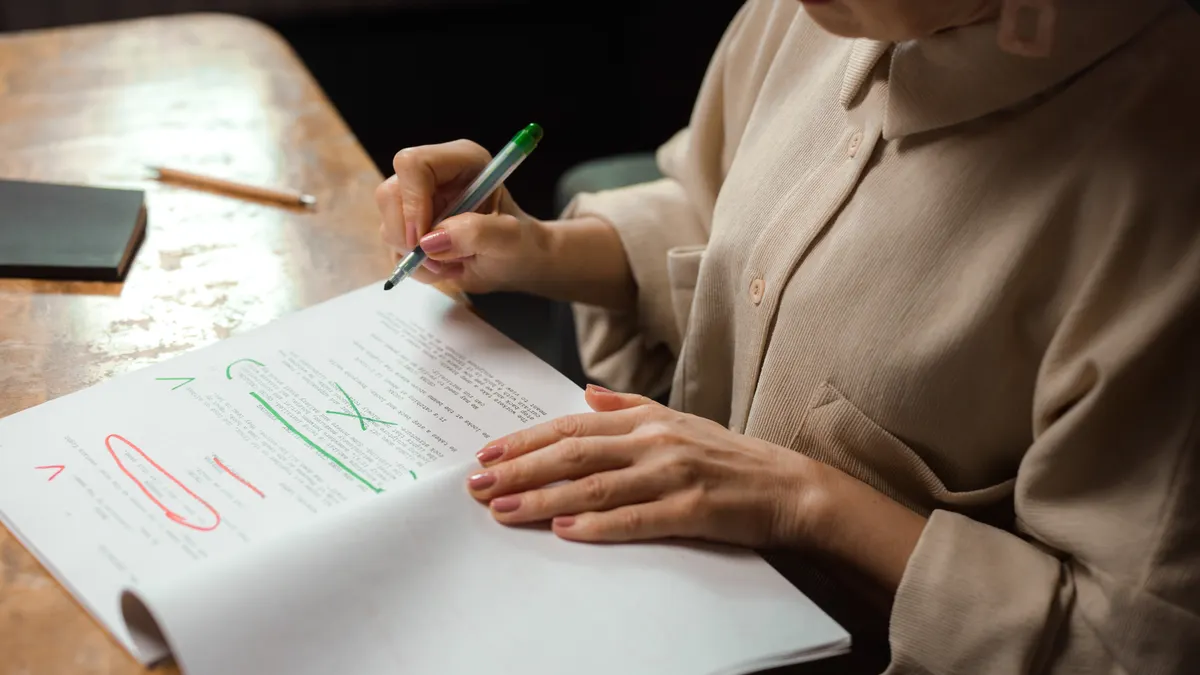
A short article usually takes 10 to 15 minutes for a good first pass, and it goes faster when you mark the draft in four colors: facts to verify, claims to soften, sentences that run long, and lines that sound off-brand. That sounds almost too tidy, but it keeps you from polishing style before substance. Making a sentence prettier only buries the problem when the sentence is wrong.
The opening paragraph deserves special attention. It should tell the reader exactly what the page helps them do, in plain language. When the first paragraph could belong to three other topics, it is too vague. A reader should be able to say, after one read, “This page tells me how to clean up AI writing so it sounds clear and human.”
This is the same logic used in professional editing workflows and in style guides such as the AP Stylebook and the Microsoft Writing Style Guide: facts first, language second. Tone cannot rescue a broken sentence; it can only make a correct one easier to trust. See also the AP Stylebook and the Microsoft Writing Style Guide.
How do I edit AI-generated text step by step?
Run AI-generated text through six steps: verify, trim, organize, simplify, align tone, and do a final read aloud. The order matters, because each move depends on the one before it.
- Verify every concrete claim. Compare names, dates, counts, definitions, and product references with a source you trust. What you want at the end is a draft with no shaky detail left to distract the reader.
- Cut repeated ideas. Remove sentences that say the same thing in different words, especially near the top of the piece. When this works, the draft gets shorter without losing meaning.
- Rebuild the structure. Put the main answer near the top, move support later, and group related points together. A reader should be able to scan the headings and predict the flow.
- Shorten sentences that carry too much weight. Break long strings of clauses into two or three sentences, and keep one idea per sentence when possible. The page should feel easier to breathe through.
- Set the tone deliberately. Decide whether the piece should sound direct, warm, authoritative, or technical, then change words that fight that choice. “Helpful and precise” is better than “friendly” if the topic needs confidence.
- Read the draft out loud once. Awkward rhythms, repeated words, and weak transitions show up fast when you hear them. When the piece sounds like something a person would say, the edit is close.
This process works because it separates different kinds of problems. A sentence can be factually correct and still sound stiff. It can also read smoothly while hiding the point. Treating every edit as one job usually leads to overediting the good lines and missing the weak ones, so a professional editor or subject-matter expert can help when the draft is high stakes.
How to make AI writing clearer without flattening it
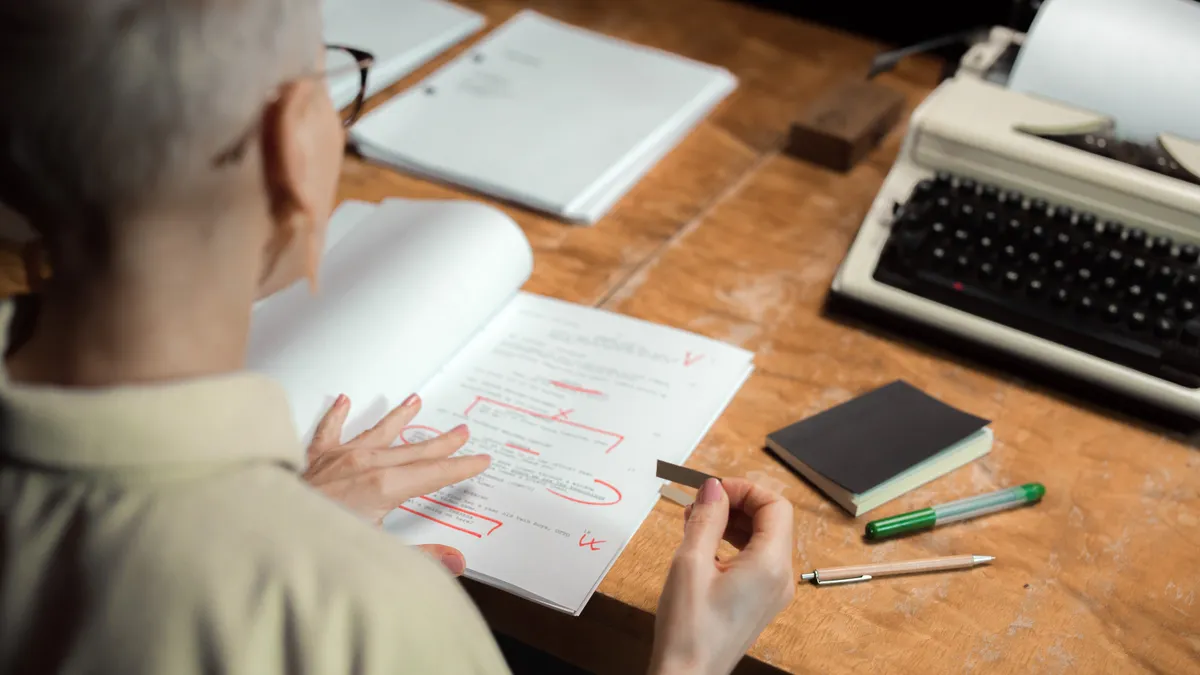
Clarity comes from fewer words, fewer ideas per sentence, and fewer hidden assumptions. The fastest reliable improvement is to make each paragraph answer one question and each sentence carry one job. When a paragraph contains three ideas, split it. When a sentence needs a second read, it is too dense for most readers.
A practical rule: keep your average sentence close to the length of a normal spoken breath, then use a longer one only when it carries necessary detail. A 30-word sentence is not automatically bad, but a paragraph full of them turns heavy in a hurry. AI drafts often stack modifiers and filler phrases around a simple point, so strip out words that do not change the meaning. “Very,” “basically,” “clearly,” and “in order to” are common targets.
Clarity also depends on shape. Readers understand content faster when the key noun appears early in the sentence. “The style guide should govern tone” is clearer than “Tone should be governed by the style guide,” because the subject arrives sooner. The same principle helps with headings: name the action, not the category. “How to remove repetition” is more useful than “Further considerations.”
Generic AI drafts often blur the line between explanation and advice. When a paragraph starts teaching, keep it teaching. When it starts instructing, finish the instruction before changing gears. That discipline matters in blog posts, onboarding pages, and help content where the reader is scanning for the next step, not for rhetorical variety.
One useful standard here is plain-language writing: state the point early, use familiar words where they work, and avoid burying the verb. This is not about making the writing dumb; it is about reducing friction. When a reader can understand the sentence on the first pass, the draft is clearer. Simple enough, yet it changes the whole feel.
How do I keep my brand voice in AI writing?
Edit against a style guide, not against a feeling. Tone is easier to control when you can point to specific rules: preferred terms, banned phrases, sentence length, level of formality, and whether the brand speaks in first person or second person. Without those guardrails, “make it sound on brand” usually turns into mush. For related guidance, see the style guide checklist and brand voice examples.
Start by naming three voice traits. For example: direct, calm, and precise. Then write one line under each trait that explains what it means in practice. “Direct” might mean no hedge phrases like “it could be said that.” “Calm” might mean no hype. “Precise” might mean numbers, standards, and concrete nouns instead of vague abstractions. That gives you a checklist you can use in under 5 minutes.
Next, compare the draft to the style guide line by line. Watch for mismatches in pronouns, punctuation, contractions, and terminology. When the guide says “use ‘website,’ not ‘site’ in the first mention,” make that change everywhere, not just once. A voice mismatch in one paragraph feels accidental; the same mismatch repeated 4 or 5 times starts to sound like a different author.
The hardest part is removing language that sounds polished but not like your brand. AI writing often overuses “unlock,” “transform,” “journey,” and other inflated words that push the piece away from trust. When your brand voice is practical, replace those with plain verbs. When your voice is premium, the sentence can still be elegant without becoming vague.
This is also where a human editor should say no. When the AI draft is trying to be witty, inspirational, and technical on the same page, it is wrong for a brand that needs consistency. A clean voice beats an exciting one that changes direction every 200 words.
What common AI writing mistakes should I remove?
Repetition, filler, generic transitions, and tone drift are the main culprits, and each one steals the reader’s time. Repetition makes the piece longer without making it clearer. Filler weakens the point. Generic transitions make the page sound machine-made. Tone drift makes the audience stop trusting the voice.
Repetition usually shows up in pairs: “clear and concise,” “simple and easy,” “helpful and informative,” or the same point stated in the heading, the opening sentence, and the first body paragraph. Remove one version and keep the strongest. When two sentences say the same thing, one of them is dead weight.
Filler usually arrives as softening language. “It is important to note that” can often be deleted entirely. So can “in today’s world,” “when it comes to,” and “in order to.” These phrases do not add meaning; they only make the reader wait longer for the actual point. Paper tinsel, basically.
Tone drift is subtler. A draft can start friendly, then become stiff and corporate, then end with a sales pitch. That happens when the AI pulls from mixed patterns. Fix it by choosing a target tone for the whole piece and editing every section to match that choice. When the voice should be authoritative, do not suddenly start sounding chatty in the conclusion.
One honest limitation: a heavy AI draft may need more than a light edit. When the structure is wrong, the voice is generic, and the facts are shaky, a rewrite can be faster than a line edit. That is not a failure; it is a sign the draft was a rough starting point, not a near-final piece. For a related workflow, see how to fact-check content.
How do I make the tone consistent from start to finish?
Tone stays consistent when you edit one paragraph at a time against a single target mood and then read the whole piece once for drift. Tone is not a sentence-level trick; it is a pattern across the page. When the opening sounds confident and the middle sounds hesitant, the reader notices even if they cannot name the problem.
Choose the tone in plain language before editing. For example: “clear, practical, and slightly formal” or “warm, direct, and expert.” Then scan for words that fight that choice. A formal piece should not include jokes that break concentration. A practical piece should not swell into promotional language. A warm piece should still stay specific.
A useful test is substitution. When a sentence could appear in a product page, a newsletter, and a support article without changing much, it is probably too generic. Tone needs markers: a tighter verb, a sharper noun, or a more exact level of certainty. “This can help reduce confusion” is softer than “This reduces confusion by removing duplicate instructions.” The second line has a clearer voice because it says what it means.
Consistency also means deciding what not to do. When the brand avoids contractions, keep them out. When the brand uses contractions, do not switch them off halfway through. When the style guide prefers sentence case headings, do not mix in title case just because the AI did. Small inconsistencies pile up faster than most writers expect.
For a deeper editing workflow, the hub on editing AI content should sit next to this page, because the human pass does not end with tone alone. Tone is one piece of the job; structure and accuracy still matter. See the editing AI content hub and content editing workflow.
When should I stop editing and rewrite the draft?
Rewrite the draft when the core idea is right but the structure, voice, and evidence are all weak enough that line edits would take longer than starting over. That usually happens when you are changing more than half the sentences, moving major sections, and correcting several facts at once.
A rewrite is the better choice when the draft sounds like a summary of summaries. When every paragraph says a version of “this is useful” or “this matters,” there is not enough substance to salvage. The same is true when the draft is trying to cover 5 points but never commits to one main answer. At that stage, polishing is wasted motion.
The trade-off is time. Rewriting takes longer up front, but it can save 20 or 30 minutes of awkward patching on a messy draft. Editing a better draft is faster than forcing a weak one into shape. A clean human edit pass should improve the piece, not rescue it from being built wrong.
A practical threshold helps. When you can fix the draft with about one meaningful change per paragraph, edit it. When every paragraph needs a structural fix and a tone fix, rewrite it. That rule is not mathematical, but it keeps you from sinking time into a page that needs a new spine.
The main thing not to do is keep every sentence just because it exists. AI-generated content is easy to overrespect because it looks finished. It is not finished until the facts hold, the tone fits, and the reader can move through it without stumbling.
What should i edit first in ai-generated text?
Edit the facts first, then the structure. A polished sentence with a wrong date, name, or definition is still a bad sentence. Once the concrete details are sound, remove repetition and simplify the wording so the draft reads cleanly. A 10-minute fact pass saves more trouble than fixing tone too early.
How do i keep my brand voice in ai writing?
Use a style guide and edit against specific voice rules. Decide how formal the brand sounds, what words it prefers, and whether it uses contractions, then apply those choices consistently across the whole draft. When the voice feels mixed, remove phrases that sound generic or promotional.
How do i make ai writing clearer?
Shorten the sentences, cut repeated ideas, and put the main point earlier. Clarity improves when each paragraph has one job and each sentence uses direct words. When a line needs a second read, break it in two and move the key noun closer to the front.
Drafted with AI; not yet reviewed by a person.