Last updated: October 13, 2026
Quick Answer: for most bloggers, a practical content writing tools for bloggers stack is one planning tool, one drafting tool, and one editing tool; a simple setup like that usually covers the work without extra overhead. In this guide to content writing tools for bloggers: planning posts, drafting faster, and staying consistent, I focus on what actually reduces blank-page time, missed deadlines, and broken posts. I write from the perspective of someone who has worked around editorial workflows for years, so I care less about shiny features and more about whether a tool actually reduces blank-page time, missed deadlines, and broken posts.
Key Takeaways
- A narrow tool that fixes one bottleneck can still disappoint.
- A blogger stack should reduce planning, drafting, revising, and publishing friction.
- Planning tools help most when they clarify the next post.
- Drafting is faster when thinking and writing are separated.
The real problem bloggers are trying to solve
The real problem is not “which app writes the best paragraph”; it is “which stack keeps me publishing when I am busy, distracted, or stuck.” A blogger usually needs three different kinds of help: a place to plan topics, a way to draft without starting from zero, and a system that makes consistency possible even in a rough month. If a tool only solves one of those, it tends to disappoint.
That is why so many generic recommendations fail. A grammar checker can polish sentences, but it will not tell you what to write next. An AI writing assistant can speed up a draft, but it will not save a scattered content calendar. A note app can hold ideas, but it will not stop you from publishing three posts in one week and then disappearing for six weeks.
I would frame the decision like this: choose tools that fit your weakest stage, not your favorite feature. If planning is your bottleneck, a content calendar or topic system is often the better fit. If drafting is the bottleneck, you need outline support, templates, and an editor that gets you to a workable first draft faster. If consistency is the bottleneck, you need reminders, recurring workflows, and a posting rhythm you can repeat on a bad week, not just on an ideal one.
The subject here is not one app. It is the stack. A blogger who has Monday.com, Notion, or Trello for planning, Google Docs or WordPress for drafting, and Grammarly or Hemingway for cleanup is often better served than someone who buys a single “all-in-one” tool and never uses half of it. The trade-off is obvious: more pieces mean more setup. The benefit is just as obvious: each piece has one job, and that usually means fewer dropped posts.
What should a blogger tool stack actually do?
A blogger tool stack should help you decide, write, revise, and publish with less friction, and it should do those four jobs without demanding a PhD in project management. The better tools do not try to replace your judgment; they reduce the amount of effort wasted on setup and rework.
For planning, the useful features are simple: topic buckets, deadlines, status labels, and a place to store keywords, sources, and angles. Notion and Trello are popular because they can act as flexible content databases, while Asana or ClickUp can work better if you like assigned due dates and recurring tasks. If you only publish one or two posts a month, a spreadsheet may still be enough. That is not glamorous, but it is honest.
For drafting, I look for tools that reduce friction at the sentence level. Google Docs is still hard to beat for fast drafting because it is familiar, collaborative, and low-drama. WordPress’s block editor helps if you draft directly in the CMS and want to see formatting as you go. AI drafting tools can help with outlines, subhead ideas, or a rough first pass, but they also create a strong temptation to accept lifeless copy. That is a real weakness, not a philosophical one.
For consistency, the tools that make repetition easy are often the most useful ones. A recurring content calendar, saved post templates, reusable briefs, and checklist-style publishing workflows matter more than any single writing feature. If you publish every Tuesday, the tool should nudge you on Monday, not expect you to remember everything on your own.
The one thing a generic article leaves out is the hidden cost of switching tools. Every new app adds login friction, learning time, and another place where content can drift out of sync. If you already have a simple system that works, I would not replace it just because a tool looks clever. A working spreadsheet beats a complicated dashboard that nobody updates after week two.
Which planning tools help bloggers stay organized?
Planning tools help bloggers most when they make the next post obvious. That is the real win: less time deciding what to publish, more time publishing.
Notion wins for bloggers who want one place for ideas, outlines, briefs, and editorial notes. Its strength is flexibility. You can build a content database with status fields, categories, dates, and SEO notes, then reuse the same structure across months. The drawback is also its strength: flexibility. If you overbuild it, you end up maintaining the system instead of writing inside it. That makes Notion a poor fit for anyone who wants a tool to stay out of the way.
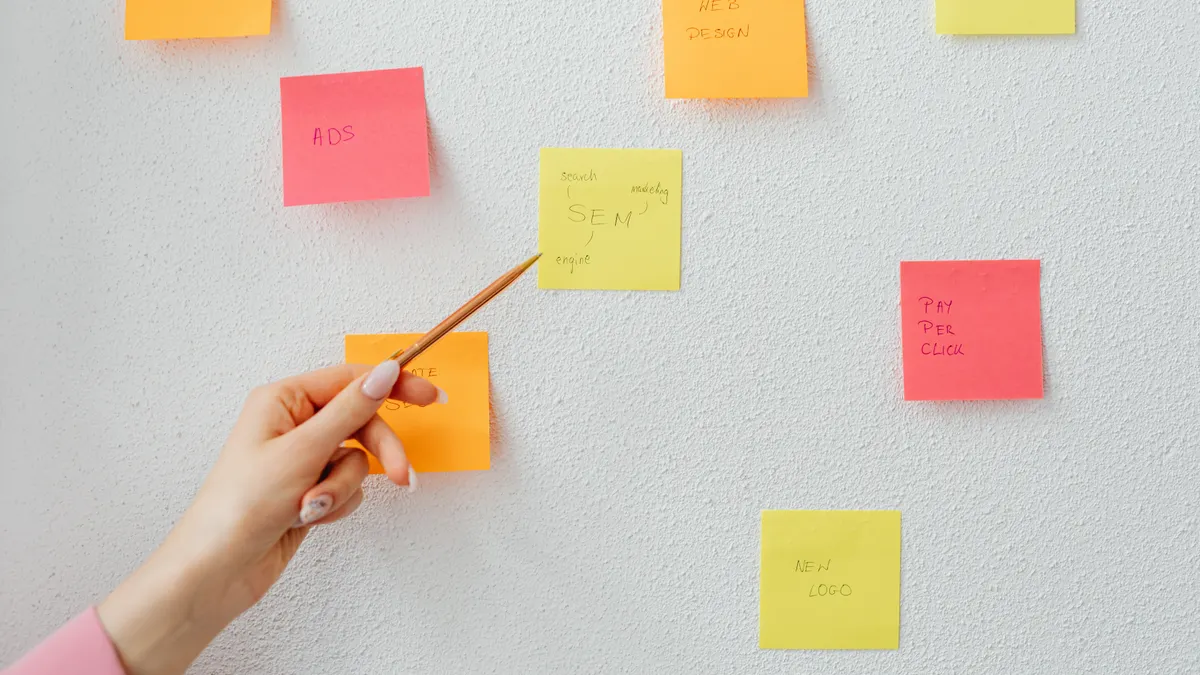
Trello wins for simple visual planning. A board with columns such as Idea, Drafting, Editing, Scheduled, and Published is easy to understand in 30 seconds. That matters if you work alone and want a lighter workflow. Trello’s weakness is depth. It can feel thin when you want robust editorial fields, search-friendly notes, or more detailed content briefs. If you publish more than a handful of posts a month, it can start to feel like a sticky-note wall.
Asana or ClickUp win when consistency depends on deadlines and recurring tasks. They are stronger for people who think in dates, assignees, and status automation. The downside is overhead. For a solo blogger, those tools can be more machinery than necessary.
The practical rule is simple: choose Notion if you want one flexible home for your editorial brain; choose Trello if you want a visual board that stays light; choose Asana or ClickUp if your real problem is missing dates, not forgetting ideas. None of these is magic. The wrong one is the one you will avoid opening because it feels like admin. For setup ideas, Notion’s own templates can be a useful starting point, and Trello’s board layout guide shows the basic workflow clearly. (Source: Notion Trello)
How can you draft blog posts faster without making them worse?
You can draft faster by separating thinking from writing and by using tools that reduce the first 30 minutes of resistance. That is where the speed is.
Google Docs is still the cleanest drafting environment for many bloggers because it encourages plain writing and makes revision easy. Its strength is that it does not demand a format before you have one. If your posts usually start as rough outlines, this matters. Its weakness is that it offers little structure on its own. A blank document is still a blank document.
AI assistants such as ChatGPT, Claude, or Jasper can speed up outlines, headline variations, rough introductions, and content expansion, but only when you already know what the post should say. Their biggest strength is reducing empty-page anxiety. Their biggest weakness is that they can make a post sound complete before it is actually specific. That is dangerous for evergreen blog content, where clarity and examples matter more than fullness. I would never hand them the whole job.
Hemingway Editor and Grammarly serve a different purpose. They are not drafting engines; they are cleanup tools. Grammarly is useful for catching mechanical issues and tone drift. Hemingway is useful when a paragraph is dense, passive, or overloaded with clauses. Neither should replace judgment, and neither will solve a weak outline. Grammarly says it checks over 300 types of writing issues, and Hemingway’s free web app keeps its focus on readability signals rather than long-form strategy. (Source: Grammarly Hemingway Editor)
Here is the part many articles miss: speed comes from templates, not prompts alone. A reusable post structure — problem, short answer, steps, pitfalls, conclusion — often saves more time than any AI feature. If you write how-to posts, reviews, or listicles repeatedly, a template gives your brain rails to follow. That is practical in the best way.
My position is blunt: use AI for scaffolding, not authorship. If you rely on it to produce most of a post, you will spend the savings on cleanup and accuracy checks. If you use it to get from idea to draft faster, it can be genuinely useful. OpenAI, Anthropic, and Jasper all position their tools around assisted drafting rather than finished publishing. (Source: OpenAI Anthropic Jasper)
Planning, drafting, and consistency: the head-to-head
The best choice depends on which job is failing most often. Planning tools, drafting tools, and consistency tools solve different bottlenecks, and the winner changes by condition.
| Criteria | Planning tools | Drafting tools | Winner for [condition] |
|---|---|---|---|
| Topic organization | Excellent for calendars, categories, and status fields | Weak unless the tool also has databases | Planning tools for editorial queues |
| Blank-page resistance | Limited | Strong, especially with outlines and templates | Drafting tools for first drafts |
| Repeatable workflow | Strong if templates are set up well | Moderate; many are focused on text generation | Planning tools for recurring publishing |
| Editing speed | Fair | Strong when paired with grammar and style checks | Drafting tools for cleanup |
| Risk of generic copy | Low | Higher, especially with AI-first tools | Planning tools for original angles |
| Setup time | Can be high at first | Low to moderate | Drafting tools for quick starts |
| Best for solo bloggers | Yes, if the system is simple | Yes, if the writer already knows the point | Tie |
| Best for multi-step editorial process | Strong | Strong only when paired with planning | Planning tools for team-like workflows |
| Consistency over months | Strong with reminders and templates | Weak by itself | Planning tools for publishing rhythm |
The table points to the same conclusion I would give a client: planning tools own the long game, drafting tools own the first draft, and the stack works best when both are used. If you only buy one category, buy the one that matches the stage where your work usually falls apart.
What should you actually choose if you blog alone?
You should choose a simple three-part stack if you blog alone: one planning tool, one drafting tool, and one editing tool. That is enough for most solo bloggers, and it is often better than a crowded app collection.
For planning, I would start with Notion or Trello. Notion is better if you want databases and content briefs in the same place. Trello is better if you want a lighter visual board. For drafting, Google Docs is the safest default because it is familiar and quick. If you already draft in WordPress, there is no rule that says you must leave the editor. For cleanup, Grammarly or Hemingway is usually enough.
The most useful part of this stack is the handoff between stages. A post idea moves from board to outline to draft to edit, and each tool handles one step without pretending to do the others. That structure is what keeps bloggers consistent. It also makes missed work easier to spot. If something sits in “drafting” for two weeks, the system is telling you exactly where the blockage is.
This setup is not ideal for everyone. If you are the sort of writer who hates process and wants to think directly on the page, any planning tool may feel like drag. If your blog is tiny and you publish only occasionally, you may not need a multi-tool stack at all. A document and a deadline may be enough.
The mistake is assuming that more software equals more output. Usually, more output comes from fewer decisions. Tools help when they remove decisions before writing starts. A small stack also makes it easier to track which post is at each stage without digging through menus.
When does a tool stack become too much?
A tool stack becomes too much when the system starts taking more attention than the posts. That tipping point shows up faster than most bloggers expect.
If you spend 20 minutes moving cards and tagging statuses before you write a single sentence, the system has become a hobby. If your outline lives in one app, your draft in another, your keywords in a third, and none of them match, you have built a scattering machine. If you need a weekly tutorial just to remember how to use the tool, it is probably too much for a solo blog.
This is where “all-in-one” platforms can become dangerous. They promise one place for everything, but they often ask for too much setup before you see any benefit. That can work for a content team with established processes. It is a bad bargain for a blogger who needs to publish this week. A simpler stack with one clear path from idea to publication is usually more durable.
I would also watch for tool overlap. If your writing app, planner, and AI assistant all do outlines, comments, checklists, and task management, you may be paying for duplicate features while still lacking a clean workflow. Overlap feels flexible until you have to decide where anything belongs.
This is the point where I would step back and ask a blunt question: does the tool make me write faster, or does it make me feel organized? Those are not the same thing. Plenty of tools give the second feeling and very little of the first. The Content Marketing Institute’s workflow guides and Google’s own Docs help pages both reflect how much friction disappears when the stack stays simple. (Source: Content Marketing Institute Google Docs)
Exception scenarios: when the verdict flips
The overall recommendation flips in a few specific cases, and ignoring those cases leads to bad tool choices.
If you already have a strong editorial process, a drafting-first tool can beat a planning-first one. A blogger who knows exactly what to publish, when to publish it, and how long each post should be may get more value from Google Docs plus Grammarly than from Notion or Asana.
If you work with multiple contributors, planning tools become the priority. At that point, task ownership, status tracking, and due dates matter more than elegant prose support. A calendar and workflow system beat a prettier editor.
If you publish long-form posts with heavy research, source management matters more than AI drafting. A note system that stores URLs, citations, and post angles may save more time than a writing assistant.
If you struggle most with consistency, not writing, then the better tool may be a recurring calendar and reminder system rather than an AI tool. The writer who misses deadlines does not need a faster paragraph generator first. They need a schedule they can actually keep.
Those are the cases where I would revise the stack instead of polishing it. The correct tool is the one that fixes the actual failure point.
The verdict: which tools should bloggers choose?
Choose Notion or Trello if your main problem is planning and keeping posts consistent. Choose Google Docs plus Grammarly or Hemingway if your main problem is drafting faster without wrecking clarity. Neither if you are buying tools because you want to feel productive while avoiding the hard part of writing.
That is the clean call. If you need one stack, I would choose a simple planner, a plain drafting space, and one editing pass tool. If you only want one category, choose the one that matches the stage where your blog stalls most often. Planning tools win for consistency. Drafting tools win for speed. The wrong choice is the one that solves a problem you do not actually have.
Drafted with AI; not yet reviewed by a person.