Last updated: October 20, 2026
Quick Answer: In most teams, AI content planning works best as a 4-step system for research, topic selection, clustering, and outline building, while human editors keep final judgment. The goal is not to ask a model for “ideas” and publish the first ten it gives back; the goal is to use AI to build a smarter content system that still reflects your audience, your expertise, and your business goals.
If the subject of the page is “AI content planning and ideation,” the real question is not “Can AI help?” It can. The better question is: How do you use AI to generate better topics without filling your calendar with generic, low-value content? That is what this guide to AI content planning and ideation answers.
I write and edit content strategy for the same reason this topic matters: most weak content plans fail before drafting starts. They chase volume, not intent. They collect random prompts, not a usable editorial system. AI can fix part of that problem, but only if the process is built around constraints, audience needs, and a review step that rejects bland output.
Key takeaways
- AI is strongest at expanding topic options, clustering themes, and surfacing angles faster than manual brainstorming.
- Better results usually come from feeding a model your audience, offer, and constraints first; vague prompts tend to produce vague calendars.
- AI should support topic selection, not replace it. Human judgment still decides what is accurate, timely, differentiated, and worth publishing.
- A good AI workflow reduces blank-page time, but it can also multiply junk if you skip editorial filters.
- A repeatable system is often the best use case for blogs, newsletters, landing pages, and social content—not one-off “give me ideas” prompts.
What AI content planning actually is
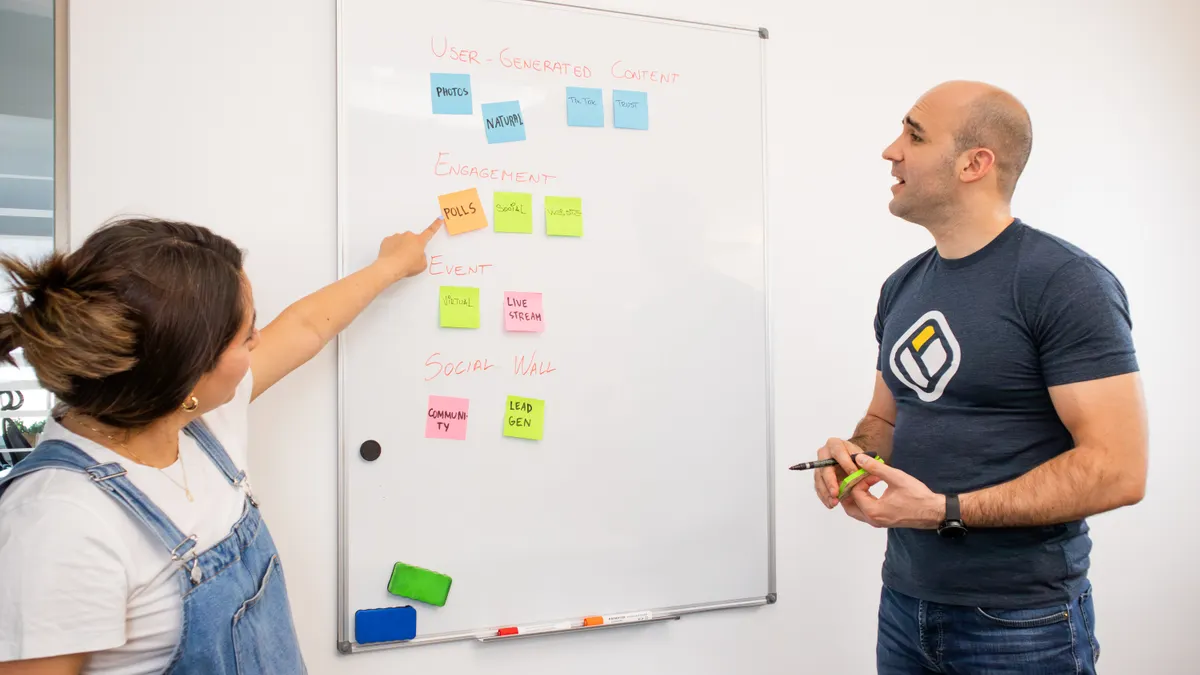
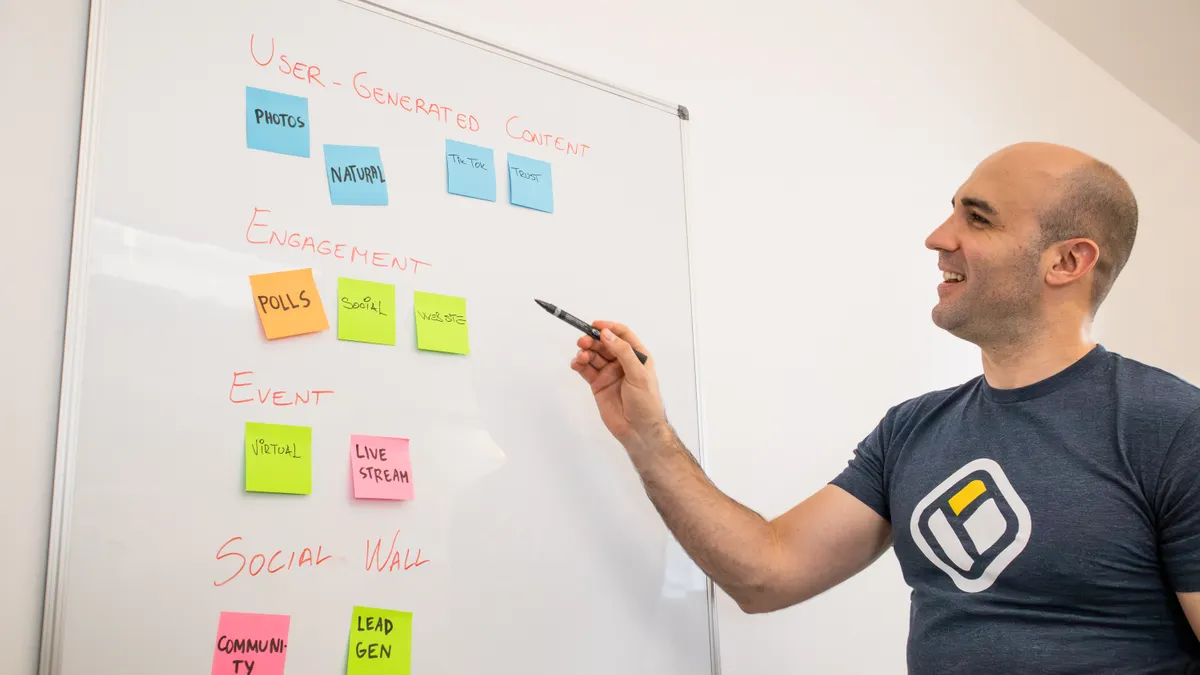
AI content planning is the use of language models to help decide what content to create, in what order, for whom, and with what angle. It is not just brainstorming. It includes topic discovery, audience segmentation, keyword grouping, content calendar design, headline testing, and outline generation.
That matters because “ideation” and “planning” solve different problems. Ideation produces options. Planning chooses among them. A model can generate 50 topic ideas in a minute, but that does not mean 50 topics deserve publication. The planning part is where the work gets hard: picking the right format, removing overlap, matching the funnel stage, and making sure the topic supports a real business outcome.
A useful AI planning system usually sits in four stages:
- Input gathering — audience pain points, product angles, existing content, seasonal events, competitor themes.
- Topic expansion — related questions, objections, comparisons, how-tos, and examples.
- Filtering and grouping — merging duplicates, assigning intent, removing weak angles.
- Production planning — deciding the order, format, and content owner for each post.
The biggest mistake is treating the model like a topic vending machine, and that can be risky in regulated or high-stakes areas where professional review matters. Without the right inputs, the model has no reason to prefer a practical angle over a recycled one. A prompt such as “give me blog ideas for marketing” is weak. A prompt such as “generate 20 content ideas for B2B SaaS founders who want more trial signups, grouped by awareness stage and filtered to topics that can support product-led growth” is useful.
For that reason, AI content planning is not just a faster version of brainstorming. It is a better version of editorial intake—if the inputs are specific and the outputs are judged against a standard.
Why most AI-generated ideas are weak
AI-generated ideas fail when the prompt is too broad, the audience is undefined, or the model is asked to invent strategy from nothing. The weakness is usually not the model’s language; it is the missing context.
A generic model can predict common internet patterns. That means it often gives you the safest possible idea, not the strongest one. The result is content that sounds correct but does not help anyone decide, act, or buy. A topic like “10 tips for better productivity” is easy to generate and hard to defend. It could fit thousands of sites and none of them especially well.
The main failure modes are predictable:
- Overlap disguised as variety. “How to plan content with AI,” “AI for content strategy,” and “Using AI for blog ideas” can be the same post in three outfits.
- Low intent match. The model proposes educational posts when the audience needs comparison content, or vice versa.
- No proof of value. Ideas sound smart but have no clear payoff: no workflow, no example, no decision.
- Trend chasing without fit. A topic sounds current but doesn’t match the site’s authority or audience maturity.
- Missing constraints. The model suggests formats the team cannot produce, such as videos, interviews, or original data reports.
The consequence is not just weaker content. It is editorial drag. Writers waste time rewriting output that should never have been approved. SEO teams publish too many near-duplicate pages. Product marketers end up with content that drives curiosity but not conversions.
AI works better when it is given rules that make bad ideas expensive to generate. For example:
- Define the audience in one sentence.
- Name the conversion goal.
- State what the site already covers.
- List formats you cannot support.
- Ask for topics by intent stage, not just theme.
That discipline turns AI from a novelty into a planning assistant.
The workflow that turns AI into a planning tool

The AI content planning workflow is a filter chain, not a single prompt. The model should do the heavy lifting on expansion, then get constrained at each stage.
A practical workflow looks like this:
1) Start with a content brief, not a prompt
A content brief should include audience, offer, primary pain point, objections, and content goal. If the site sells payroll software, the model should know whether the content is meant to attract HR managers, founders, or finance leads. “Write about payroll” is too broad. “Help HR managers at 50-200 employee companies understand payroll compliance risks before they shop software” is specific enough to produce useful angles.
2) Ask for clusters, not single ideas
Clustering helps prevent duplicate topics. Ask the model to group ideas into buckets such as:
- beginner education
- comparison and evaluation
- problem/solution
- workflow and templates
- mistakes and troubleshooting
That reveals where the editorial calendar is too thin or too repetitive. It also helps avoid a common problem: six top-of-funnel posts and no content that supports decision-making. For teams working in regulated or sensitive topics, a professional review is wise before publication.
3) Score each idea against real criteria
A scoring grid should include:
- relevance to audience pain
- fit with business goals
- uniqueness
- ease of execution
- likelihood of internal linking opportunities
- search or distribution potential
- authority required to compete
This is where a lot of plans improve. The model can suggest many directions, but only a rubric can decide which ones deserve the next hour of human time.
4) Convert winning ideas into content shapes
Not every idea should become a post. Some are better as:
- a comparison page
- a checklist
- an FAQ block
- a template download
- a short social thread
- a newsletter issue
- a landing page section
That decision matters because format affects intent. A topic about “how to choose an AI writing tool” may belong on a comparison page, while “prompt examples for content ideation” may fit a tutorial.
5) Lock the outline before drafting
The outline is where AI often saves the most time. Use it to create section logic, not final prose. A good outline should answer:
- What does the reader need first?
- What decision are they trying to make?
- What objection needs to be resolved?
- What proof or example belongs here?
Once the outline exists, the draft becomes easier to judge. If the structure is weak, the post will be weak no matter how polished the wording becomes.
A useful benchmark here is simple: if the outline could not survive being shown to an editor, the prompt was too loose.
How to prompt AI for content ideas that are actually useful
The best prompts are constrained, audience-specific, and goal-based. The model needs enough information to discriminate between ideas, not just to generate more of them.
A strong prompt usually includes five parts:
- Audience
- Goal
- Topic boundaries
- Content format
- Output rules
Example:
Generate 25 content ideas for an email marketing consultant who serves ecommerce brands with 10-50 employees. The goal is to attract founders and marketing leads who are comparing platforms. Group the ideas by awareness stage, remove duplicates, and avoid beginner-only topics. Include at least 5 comparison topics, 5 workflow topics, and 5 objection-handling topics.
That prompt works better because it sets a frame. It tells the model what not to do. It also makes the output easier to review because the buckets are already defined.
A weaker prompt looks like this:
Give me blog ideas about AI marketing.
That can still produce usable output, but it will need heavy cleanup. It is too broad to know whether the ideas should attract beginners, decision-makers, or existing customers.
The prompt gets even better when you add:
- current content gaps
- seasonal context
- product limitations
- preferred tone
- forbidden topics
- competitor themes to avoid or challenge
The trade-off is that prompts like this take more setup time. That is not a flaw. It is the price of getting ideas that are worth publishing. If the team refuses that setup, the model will compensate with generic output and the calendar will fill with sameness.
One more point: ask for variation in angle, not just in title wording. “How to plan content with AI” and “AI content planning tips” are the same idea. “How to use AI to spot content gaps,” “How to build a 90-day editorial map with AI,” and “How to turn audience objections into content themes” are different ideas.
How do I use AI for content ideation without making generic content?
Use AI for expansion and sorting, then keep a human gate on angle, accuracy, and fit. That is the simplest answer, and it is the one that holds up in practice.
The easiest way to avoid generic output is to make the model generate from real business inputs instead of abstract themes. Feed it:
- buyer questions from sales calls
- support tickets
- customer reviews
- webinar questions
- keyword clusters
- product objections
- competitor gaps
- internal expert knowledge
This is where AI becomes useful in the real world. It can connect those inputs into a topic map faster than a human can, but it cannot tell you which angle sounds smart and which one sounds like content sludge.
A good editorial filter includes these checks:
- Would a real reader care enough to click?
- Does the topic solve one problem clearly?
- Can this page be meaningfully different from existing results?
- Does it align with what the business sells or supports?
- Can the team produce it with available resources?
If an idea cannot pass those checks, it should not make the calendar, no matter how clean the wording is.
Another useful practice is to ask the model for the opposite of the obvious angle. If everyone writes “how to use AI for blog ideas,” ask for:
- what AI cannot do well in content planning
- where teams overtrust the model
- how to build a planning process that survives bad prompts
- why most AI brainstorms collapse into sameness
Those angles tend to produce more original content because they start from friction, not convenience.
A generic post often misses the real differentiator: content ideation is not about volume. It is about finding the smallest number of topics that can do the most work. AI is excellent at multiplying possibilities. It is mediocre at choosing the few that matter. That is the human job.
The head-to-head: AI-first planning versus human-first planning
AI-first planning wins for speed and scale. Human-first planning wins for depth and strategic judgment. The right choice depends on how much content you need, how much expertise you have, and how costly a bad idea would be.
| Criteria | AI-first planning | Human-first planning | Winner for [condition] |
|---|---|---|---|
| Idea volume | Produces dozens of options in minutes | Slower, often 3-10 ideas per session | AI-first when the calendar needs breadth fast |
| Originality | Often repeats familiar patterns unless constrained | Better at unusual angles from lived context | Human-first when differentiation matters most |
| Audience fit | Depends heavily on prompt quality and inputs | Usually stronger when the planner knows the buyer well | Human-first for niche or technical audiences |
| Speed to first draft outline | Fast, especially with templates | Slower because it requires more manual thought | AI-first for teams with tight deadlines |
| Risk of generic content | Higher if prompts are broad | Lower when expertise is strong | Human-first when brand voice is a priority |
| Clustering and duplication control | Good at grouping if asked directly | Good, but slower across large topic sets | AI-first for large editorial inventories |
| Strategy judgment | Weak without human oversight | Strong if the planner understands business goals | Human-first for revenue-linked content planning |
| Resource efficiency | Efficient for teams with limited bandwidth | Efficient when expertise is scarce but judgment is critical | AI-first for lean teams, human-first for high-stakes topics |
| Best use case | Generating, sorting, and accelerating first-pass ideas | Choosing priority topics and refining angles | Both, but for different steps |
The table leads to a clear conclusion: AI-first planning is the better engine, but human-first planning is still the better steering wheel. If the work is a high-volume post calendar, AI should do much of the initial sorting. If the work is a core revenue page, original report, or expert-led series, human planning should lead and AI should assist.
The biggest weakness of AI-first planning is that it can feel complete before it is correct. A planner gets a tidy list and mistakes that for strategy. The weakness of human-first planning is time. Without AI, the team may spend too long on ideation and too little on execution.
The best system is not one or the other. It is a sequence: AI expands, human filters, AI structures, human approves.
AI content planning and ideation for different team sizes
AI content planning helps small teams most when time is tight, and it helps larger teams most when content volume creates duplication. The setup changes by team size, but the logic does not.
For solo creators and freelancers
AI is a force multiplier for single-person teams because it reduces blank-page time. One person can use it to turn a single idea into a cluster of subtopics, headlines, and repurposed formats. That matters when one writer is also handling research, drafting, editing, and promotion.
The danger is overproduction. A solo creator can fill a spreadsheet quickly and still end up with a weak editorial plan. If the goal is a personal brand or niche site, the filter has to be strict. A smaller calendar with stronger angles usually wins.
This approach is best when the creator has one clear audience and a narrow content lane. It is not a good fit if the brand is still being defined. In that case, AI can generate too many directions and delay commitment.
For in-house marketing teams
AI is most useful in-house when the team already has audience insight but needs faster topic mapping. Sales objections, support questions, and product feedback give the model a strong base. The team can use AI to turn those inputs into campaign themes, post series, and lifecycle content.
The risk is internal inconsistency. If several people prompt the model separately, the calendar may drift into duplicate themes or mismatched tone. A shared prompt library and a standard scoring rubric solve much of that.
This is the right setup for teams that publish regularly and need content to support launches, nurture, and SEO at the same time.
For agencies and content studios
AI is especially useful in agencies because each client needs a different audience frame. A model can speed up first-pass ideation across multiple accounts, then help sort topics by funnel stage and format. That can save a lot of time during strategy sprints.
The downside is that agency work is where generic output gets punished fastest. Clients pay for specificity. If a model creates topics that could belong to any competitor, the planner has not done enough setup. Agencies need stronger human editing than most teams because the cost of sameness is reputational, not just operational.
The pattern is clear: the smaller the team, the more AI should help with volume. The more specialized the audience, the more human judgment should dominate the final selection.
The exceptions that change the recommendation
AI-first planning is not the right choice in every situation. There are cases where the overall recommendation flips, and those cases are common enough to name plainly.
1) Highly regulated or legally sensitive topics
Human-first planning should lead when the topic touches law, finance, medical advice, or regulated claims. AI can help organize the outline, but it should not be the primary source of topic judgment. A wrong angle can do real damage here. For anything in these categories, professional review is wise before publication.
2) Deeply technical niches
Human-first planning wins when the audience is sophisticated and notices shallow framing immediately. Examples include cybersecurity, developer tooling, advanced analytics, and enterprise architecture. AI can still help surface subtopics, but the subject expert must decide what is credible. A model can mimic terminology; it cannot verify real-world usefulness on its own.
3) Brand authority depends on point of view
If the brand is built on distinctive perspective, AI should stay in the background. This is true for thought leadership, founder-led content, and category-creation work. The issue is not that AI cannot generate content. It can. The issue is that it tends to flatten strong opinions into safe, generic language. That weakens the brand.
4) The team cannot review output properly
If there is no editor, subject expert, or strategist available to check the ideas, AI becomes a liability. It can make bad planning faster. A content system without review turns speed into waste. In that case, a slower manual process is safer than a fast automated one.
These exceptions matter because they define the boundary of the tool. AI content planning is a method, not a mandate.
The verdict: which approach to choose
Choose AI-first planning if you need a large volume of topic ideas, have a clear audience, and can review output with a human editor before anything is scheduled. Choose human-first planning if the subject is technical, regulated, high-stakes, or brand-defining. Neither if you have no clear audience, no content goal, and no one qualified to reject weak ideas.
That is the cleanest way to think about it. AI should accelerate a real strategy, not replace one. If the strategy exists, the tool is valuable. If it does not, the tool will happily fill the gap with plausible noise.
For most teams, the best operating model is simple:
- use AI to gather and cluster ideas
- use humans to choose and sharpen them
- use the model again to draft outlines and variants
- keep final approval with someone who understands the audience and the business
That sequence gives you the speed of AI without surrendering editorial control. It is the practical middle ground, and it is where most teams will do their best work.
A simple content planning system you can start with
A useful system does not need to be complicated. It needs to be repeatable. One workable setup uses a single monthly planning session and a three-pass filter.
Pass 1: Gather inputs
Collect:
- sales objections
- customer support questions
- search themes
- competitor content gaps
- product changes
- seasonal priorities
Pass 2: Expand with AI
Ask for:
- 20-30 topic ideas
- grouped by awareness stage
- grouped by format
- grouped by buyer pain point
- with duplicates removed
Pass 3: Filter by judgment
Keep only ideas that:
- match a real audience need
- support a business outcome
- are different enough to stand alone
- can be produced well by the team
Then map the winners into a 30-, 60-, or 90-day plan. If the team publishes weekly, a 90-day plan may include 12 pieces, but only if the content mix is balanced. A plan with four comparison pages and eight top-of-funnel posts may look full and still fail. The calendar should answer buyer questions in order, not just fill dates.
The point is not to automate taste. The point is to remove the slowest part of ideation so the team can spend more energy on the decisions that matter.
What a strong AI content plan looks like in practice
A strong plan is built around intent, not just topic count. It contains a mix of content types that each serve a different job.
A healthy plan usually includes:
- educational posts that define the problem
- comparison pages that help people choose
- workflow content that shows how to act
- objection-handling content that reduces friction
- support content that answers practical questions
The plan should also show progression. A reader should be able to move from awareness to consideration without hitting dead ends. That means the content set should not be a random pile of posts. It should feel like a path.
This is where AI can be especially helpful. It can reveal holes in the path faster than manual review can. For example, a model may show that the site has many “what is” posts but almost no “how to choose” or “common mistakes” pages. That gap is valuable because it shows where the reader gets stuck.
Still, the plan only becomes strong when someone asks the hard question: Which topics deserve to exist because they help the reader decide, and which ones exist only because they are easy to generate? AI can surface both. Human judgment has to separate them.
That is the real standard for AI content planning and ideation. Not speed for its own sake, not volume for its own sake, but better choices made faster.
Drafted with AI; not yet reviewed by a person.